.png)
Introduction: The Currency of Now in the Digital Age
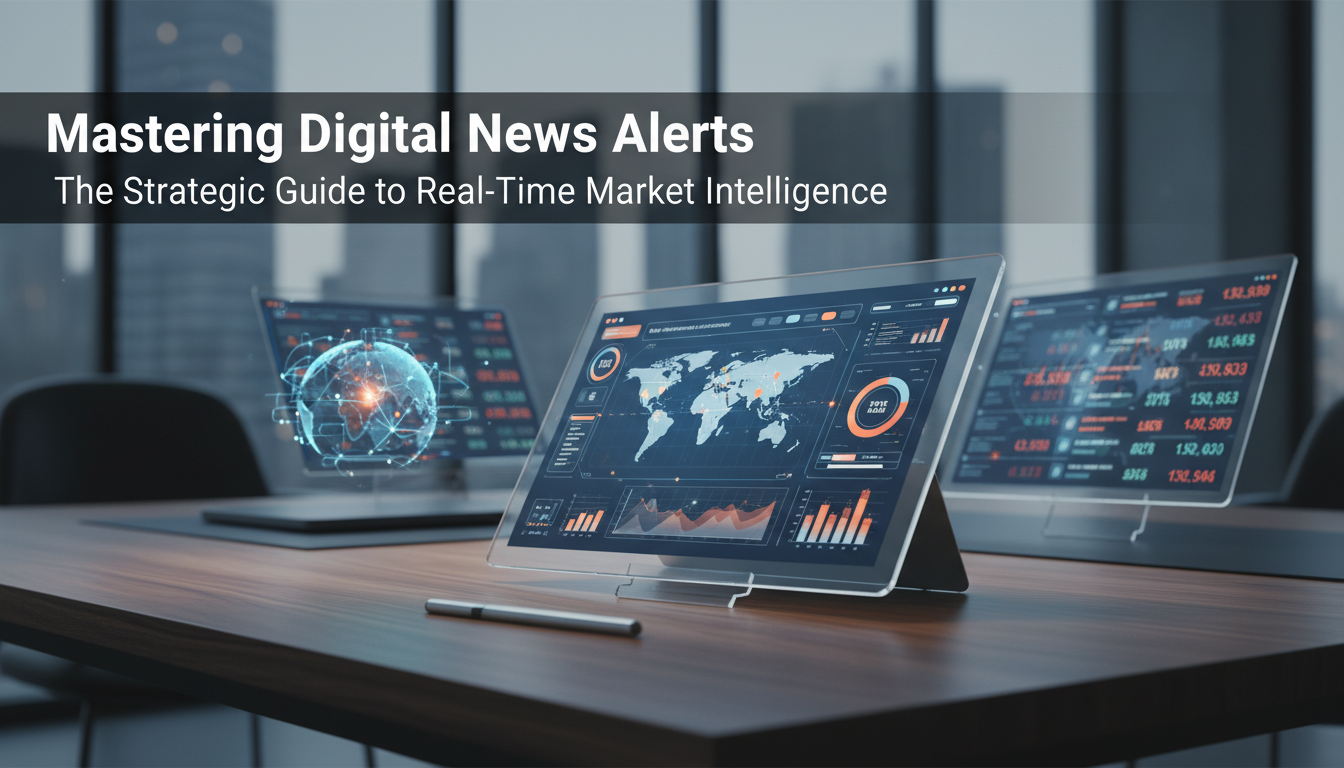
In the high-velocity ecosystem of modern business, information is not just power—it is the fundamental currency of survival. For executives, investors, and tech leaders, the ability to discern a market-shifting signal from the cacophony of digital noise is what separates industry disruptors from the disrupted. Digital news alerts have evolved from simple keyword notifications into sophisticated, AI-driven intelligence systems that provide real-time situational awareness.
Imagine knowing about a competitor’s patent filing, a sudden shift in regulatory compliance, or a viral sentiment spike regarding your brand before the market opens. This is not science fiction; it is the standard operating procedure for agile enterprises utilizing advanced media monitoring. Whether you are leveraging tools found on All AI Tools or configuring custom API integrations, mastering the art of the digital alert is a strategic necessity.
This comprehensive guide dives deep into the architecture of modern news monitoring. We will move beyond basic “Google Alerts” to explore how Artificial Intelligence, Natural Language Processing (NLP), and strategic boolean logic combine to create a robust market intelligence framework. We will examine how to filter noise, protect your data, and turn raw information into actionable strategy.
The Evolution of Media Monitoring: From RSS to AI
To understand the future of digital news alerts, one must appreciate the trajectory of the technology. In the early 2000s, RSS feeds and basic email notifications served as the backbone of news aggregation. However, these legacy systems suffered from two fatal flaws: latency and lack of context.
The Limitations of Keyword Matching
Traditional alerts relied on exact keyword matching. If you tracked “Apple,” you received everything from quarterly earnings reports to pie recipes. This resulted in information overload—a state where the sheer volume of data paralyzes decision-making. Professionals spent more time sorting through irrelevant emails than analyzing actual threats or opportunities.
The Rise of Semantic Search and AI
Today, the landscape has shifted dramatically. Modern monitoring tools utilize semantic search and machine learning to understand the intent behind a query. For instance, advanced algorithms can distinguish between “Jaguar” the car manufacturer and “jaguar” the animal based on the surrounding context of the article. This leap in technology is powered by the same underlying models discussed in our overview of OpenAI’s GPT-4, which demonstrates how Large Language Models (LLMs) can synthesize vast amounts of text into coherent summaries.
Strategic Use Cases for Real-Time Market Intelligence
Implementing a robust digital news alert system allows organizations to pivot from reactive damage control to proactive strategy execution. Here are the primary domains where real-time alerts deliver high ROI.
1. Financial Market Intelligence and Sentiment Analysis
For traders and fintech analysts, milliseconds matter. Digital news alerts linked to financial data streams can trigger automated trading algorithms or alert portfolio managers to rebalance assets. Beyond just price tracking, sentiment analysis tools scan news headlines to gauge market fear or greed.
Investors looking for an edge often turn to specialized platforms. For example, staying updated with specific financial news aggregators like FintechZoom can provide granular insights into crypto and stock movements. Furthermore, for those deeply involved in growth sectors, combining news alerts with high-growth stock market analysis ensures that you capture the narrative driving the numbers.
2. Competitor Intelligence and Brand Monitoring
Your competitors are likely launching features, hiring key talent, or facing PR crises that you can capitalize on. A strategic alert system monitors:
- Executive Movements: Alerts for “CEO” + “Resigned” + “[Competitor Name]” allows you to anticipate strategic pivots.
- Product Launches: Tracking patent filings and beta test announcements.
- Pricing Changes: detecting shifts in competitor subscription models via press releases.
By understanding generative AI adoption trends across major industries, you can also set alerts to see which competitors are integrating AI first, giving you a benchmark for your own innovation roadmap.
3. Crisis Management and PR Defense
In the age of viral social media, a brand reputation crisis can escalate globally in minutes. Digital news alerts act as an early warning system (EWS). By monitoring for negative sentiment keywords associated with your brand, legal team, or executives, you can prepare a statement before a story hits the mainstream news cycle.
Designing Your Alert Architecture: A Technical Guide
Setting up an effective news monitoring ecosystem requires more than just typing a few words into a search bar. It requires a structured approach to query design.
Mastering Boolean Logic for Precision
To reduce noise, you must use Boolean operators (AND, OR, NOT) effectively. This is similar to the precision required when asking AI a question to get a specific output. Here is how to structure high-value queries:
- Broad Monitoring:
("AI Tools" OR "Machine Learning") AND "Enterprise" - Crisis Exclusion:
"Brand Name" AND NOT ("jobs" OR "internship")(This removes job listings from your brand news feed). - Specific Proximity:
"Acquisition" NEAR/5 "Tech Giant"(Finds articles where these words appear within 5 words of each other).
Integrating Predictive Analytics
The next frontier of digital news alerts is prediction. Instead of just reporting what happened, AI tools are beginning to forecast what might happen based on news velocity. If you are wondering what future trends in AI you should watch, predictive news analytics is top of the list. These systems analyze historical data to predict the virality of a news story, allowing PR teams to allocate resources efficiently.
Data Privacy and Information Security
As you aggregate data from thousands of sources, security becomes paramount. Corporate espionage is a real threat, and the metadata of what you are monitoring can reveal your company’s confidential strategy. If a competitor knows you are setting alerts for “mergers and acquisitions in the semiconductor space,” they know your playbook.
Ensure your monitoring tools comply with GDPR and CCPA regulations. Furthermore, when distributing this intelligence internally, robust data protection strategies must be in place to prevent leaks of your proprietary market intelligence reports.
Top Features to Look for in Modern Alert Tools
When selecting a digital news alert platform in 2025, look for these “Must-Have” features:
1. Multi-Language Support
Global businesses cannot rely on English-only sources. The best tools offer real-time translation of local news markets in Asia, Europe, and South America.
2. Visual Recognition
Sometimes the news isn’t in the text—it’s in the image. Visual listening tools can detect your logo in photos posted on news sites or social media, even if the brand name isn’t mentioned in the caption.
3. API Integration capability
Can the alert system feed directly into your Slack, Microsoft Teams, or CRM? The speed of delivery is as important as the accuracy of the content.
Conclusion
Mastering digital news alerts is no longer an administrative task; it is a core competency of strategic leadership. By transitioning from passive information consumption to active, AI-driven market intelligence, you position your organization to anticipate change rather than react to it. Whether you are tracking high-growth stocks, monitoring global AI adoption trends, or protecting your brand reputation, the tools and strategies outlined here provide the blueprint for staying ahead of the curve. In a world of infinite data, the ultimate competitive advantage is clarity.
Frequently Asked Questions
What is the difference between Google Alerts and paid media monitoring tools?
Google Alerts is a free, basic service that tracks web content based on keywords. Paid media monitoring tools offer advanced features like sentiment analysis, social media listening, broadcast monitoring (TV/Radio), historical data access, and detailed analytics dashboards that Google Alerts lacks.
How can digital news alerts help with SEO strategy?
News alerts help SEOs by identifying unlinked brand mentions (opportunities to ask for backlinks), tracking competitor content strategies, and spotting trending topics (newsjacking) to create timely, high-traffic content before the competition does.
Can AI news alerts replace human analysts?
Not entirely. While AI is excellent at aggregating data, filtering noise, and identifying patterns, human analysts are still required to interpret the strategic nuance, verify the veracity of complex geopolitical situations, and make high-stakes decisions based on the intelligence provided.
How do I prevent “Alert Fatigue”?
To prevent alert fatigue, use strict Boolean exclusions (NOT operators) to filter out irrelevant terms. Additionally, set up “digest” emails for low-priority topics so you receive a daily summary rather than real-time pings, reserving instant alerts only for critical crisis keywords.
Are there free alternatives to expensive enterprise monitoring suites?
Yes, besides Google Alerts, there are “freemium” tools like Talkwalker Alerts or Mention that offer more robust features than Google for free, though they often come with limits on the number of mentions or history. For specific niches, relying on curated aggregators or RSS readers can also serve as a cost-effective alternative.

The editor of All-AI.Tools is a professional technology writer specializing in artificial intelligence and chatbot tools. With a strong focus on delivering clear, accurate, and up-to-date content, they provide readers with in-depth guides, expert insights, and practical information on the latest AI innovations. Committed to fostering understanding of fun AI tools and their real-world applications, the editor ensures that All-AI.Tools remains a reliable and authoritative resource for professionals, developers, and AI enthusiasts.