.png)
Introduction: The Imperative of Executive Evolution
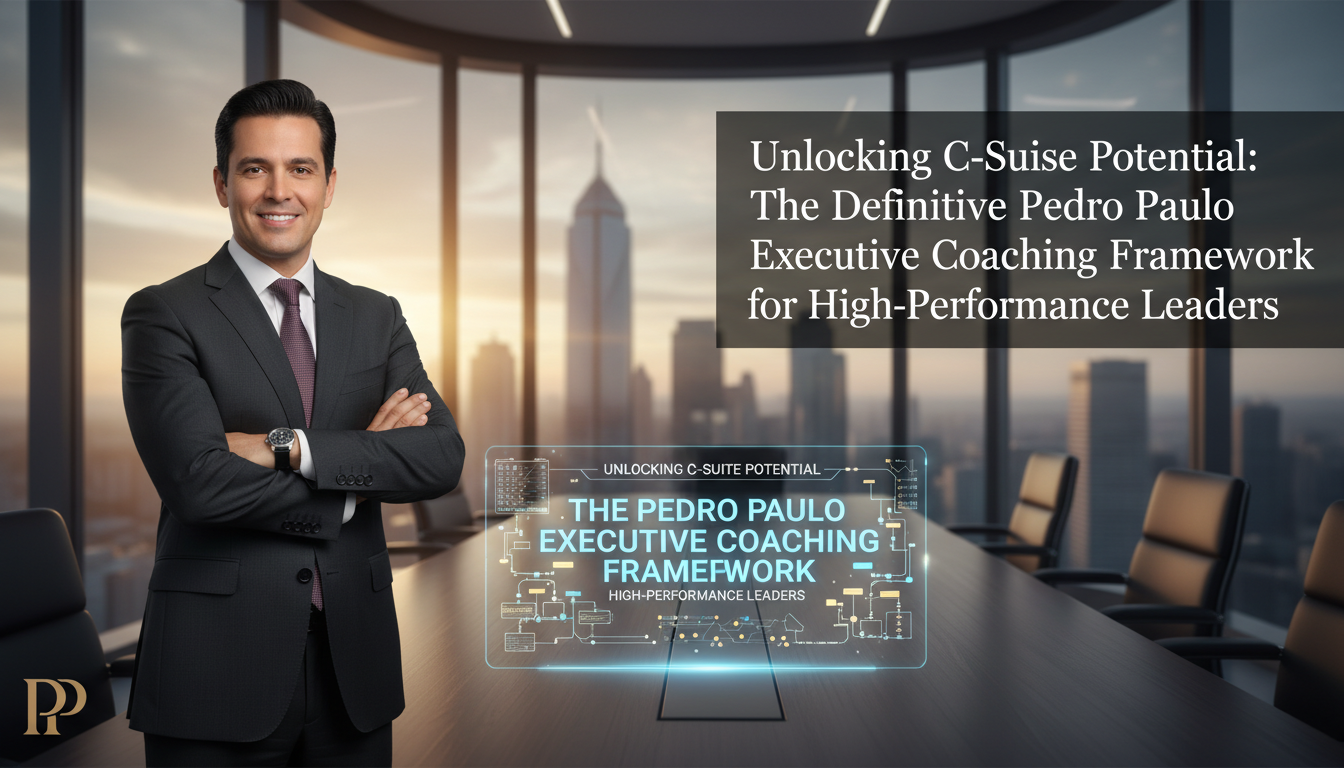
In the volatile landscape of modern business, the stagnation of C-level leadership is the silent killer of enterprise innovation. As markets pivot with increasing velocity—driven by artificial intelligence, geopolitical shifts, and changing consumer behaviors—the traditional playbook for executive management is being rewritten. Enter the Pedro Paulo Executive Coaching Framework, a definitive, high-performance methodology designed not merely to correct leadership deficiencies but to unlock latent potential within the C-Suite.
For over a decade, the conversation around executive coaching has shifted from remedial intervention to strategic acceleration. High-performing leaders are no longer defined solely by their past tenure but by their adaptability quotient (AQ) and their ability to synthesize complex data into clear strategic vision. This guide serves as a comprehensive deep dive into the Pedro Paulo methodology, a rigorous system that aligns personal leadership biology with organizational macro-strategy.
Throughout this pillar article, we will dissect the anatomy of this framework, exploring how it integrates modern technological competencies with timeless behavioral psychology. As we navigate these strategies, we will also draw upon broader industry insights found on our main insights hub to contextualize how digital tools and leadership intersect.
The Core Philosophy of the Pedro Paulo Framework
At its heart, the Pedro Paulo Executive Coaching Framework operates on the premise that leadership is a dynamic performance art backed by scientific rigor. It rejects the “one-size-fits-all” seminar approach in favor of a bespoke, data-driven developmental arc. The framework rests on four non-negotiable pillars: Cognitive Agility, Emotional Resonance, Strategic Foresight, and Operational Mastery.
1. Cognitive Agility in the AI Era
The modern executive must process information at an unprecedented scale. The Pedro Paulo approach emphasizes Cognitive Agility—the ability to unlearn obsolete mental models and relearn adaptive strategies rapidly. This is particularly crucial as leaders face the integration of generative AI into business operations. A CEO who cannot conceptualize the impact of large language models is driving blind.
To stay ahead, leaders must understand the trajectory of technology. For instance, understanding future trends in AI is no longer optional for the CTO alone; it is a mandate for the entire board to ensure the organization remains competitive against nimble disruptors.
2. Emotional Resonance and Cultural Architecture
The second pillar focuses on the leader as the Cultural Architect. The framework posits that a high-performance leader must possess the emotional intelligence (EQ) to resonate with a diverse, often remote, workforce. This involves mastering the nuances of digital communication and fostering psychological safety.
Deep Dive: The 5-Step Transformation Process
The Pedro Paulo Framework is executed through a structured, linear progression designed to strip away inefficiencies and rebuild executive capability from the ground up.
Phase 1: The Diagnostic Audit
Before any coaching begins, a brutal audit of the current leadership style is conducted. This involves 360-degree feedback, psychometric testing, and a review of past strategic decisions. It mirrors the precision found in high-stakes financial analysis. Just as an investor might perform a high-growth stock market analysis to determine asset viability, the coach analyzes the leader’s “human capital” value.
Phase 2: Vision Alignment
Once the baseline is established, the framework moves to alignment. Does the executive’s personal ambition map to the organization’s 5-year plan? Misalignment here is the root cause of C-Suite burnout. This phase often involves revisiting personal wealth and value creation goals, similar to robust wealth building strategies, ensuring that the leader’s personal success is inextricably linked to the company’s triumph.
Phase 3: Skill Acquisition and Technological Fluency
In this critical phase, the executive is upskilled. In 2025, this invariably includes technological fluency. Leaders are trained not to be coders, but to be architects of tech adoption. They must learn how to interact with advanced systems effectively. For example, knowing how to ask AI a question (prompt engineering for executives) is becoming a standard competency for decision-making support.
Phase 4: Simulated Crisis Management
Theory is tested through simulation. The Pedro Paulo Framework uses “War Room” scenarios where executives must navigate complex crises—be it a data breach, a PR scandal, or a supply chain collapse. This builds muscle memory for high-pressure decision-making. Security and compliance are major themes here; leaders must understand the gravity of a data protection strategy to mitigate risk in real-time.
Phase 5: Integration and Legacy Building
The final phase is about sustainability. How does the leader mentor their successor? How do they institutionalize their improvements? This phase transforms the executive from a manager into a legacy builder.
Navigating Industry-Specific Leadership Challenges
The application of the Pedro Paulo Framework varies across verticals. The core principles remain, but the variables change.
Healthcare Leadership: Empathy Meets Efficiency
In the healthcare sector, executives face a dual challenge: patient care ethics versus operational efficiency. Implementing AI and digital tools in this space is fraught with regulatory and ethical hurdles. Leaders coached under this framework learn to navigate these complexities by focusing on patient-centric innovation. They must deeply understand the challenges in implementing AI in healthcare to guide their institutions through digital transformation without compromising care standards.
Tech and Recruitment: The War for Talent
For tech leaders, the primary challenge is often talent acquisition. The framework coaches leaders on identifying high-potential candidates who can thrive in automated environments. The interviewing process itself is evolving. Executives are now learning to leverage tools that assist in vetting, similar to the insights found in our guide on the best AI copilot interview techniques. This ensures that the leadership pipeline remains robust and future-proof.
The ROI of Executive Coaching
Why should organizations invest in the Pedro Paulo Framework? The Return on Investment (ROI) is measurable across three dimensions:
- Speed of Decision Making: Reducing the lag time between data acquisition and strategic action.
- Retention of Top Talent: Leaders who are self-aware and visionary retain high-performing teams.
- Innovation Velocity: A coached leader fosters a culture where experimentation is encouraged, and failure is viewed as data, not disaster.
Strategic Tools for the Modern Executive
No framework exists in a vacuum. The Pedro Paulo approach advocates for the use of cutting-edge tools to supplement human judgment. From predictive analytics dashboards to AI-driven sentiment analysis of company culture, the toolkit of the modern leader is vast. Utilizing these resources allows for a shift from reactive management to proactive leadership.
Frequently Asked Questions
What distinguishes the Pedro Paulo Framework from traditional coaching?
Unlike traditional coaching which often focuses on soft skills in isolation, the Pedro Paulo Framework integrates data-driven performance metrics and technological fluency directly into leadership development. It treats leadership as a measurable, optimize-able discipline rather than just an art form.
How long does a typical engagement last?
A full cycle of the Pedro Paulo Framework typically spans 6 to 12 months. This duration allows sufficient time for the Diagnostic Audit, skill acquisition, and the critical integration phase where new behaviors become habitual.
Is this framework suitable for non-tech industries?
Absolutely. While the framework emphasizes digital adaptability, its core pillars of Strategic Vision and Emotional Intelligence are universal. Whether in manufacturing, retail, or healthcare, the principles of high-performance leadership apply.
How do you measure the success of the coaching?
Success is measured through defined KPIs established during the Diagnostic Audit. These often include employee engagement scores, revenue growth, retention rates, and the successful execution of strategic initiatives defined at the onset.
Can this framework help with C-Suite conflicts?
Yes. A significant portion of the “Emotional Resonance” pillar is dedicated to conflict resolution and alignment. By clarifying vision and roles, the framework reduces friction and fosters a cohesive executive team dynamic.
Conclusion
Unlocking C-Suite potential is not a passive exercise; it requires a deliberate, structured intervention. The Pedro Paulo Executive Coaching Framework offers a definitive roadmap for leaders who refuse to settle for mediocrity. By combining rigorous self-assessment with strategic foresight and technological adaptation, this framework prepares executives to lead not just for today, but for the unpredictable challenges of tomorrow.
For leaders ready to transcend traditional management paradigms, the journey begins with a commitment to transformation. As the digital horizon expands, those equipped with the right mental models and strategic tools will define the future of industry.

The editor of All-AI.Tools is a professional technology writer specializing in artificial intelligence and chatbot tools. With a strong focus on delivering clear, accurate, and up-to-date content, they provide readers with in-depth guides, expert insights, and practical information on the latest AI innovations. Committed to fostering understanding of fun AI tools and their real-world applications, the editor ensures that All-AI.Tools remains a reliable and authoritative resource for professionals, developers, and AI enthusiasts.