.png)
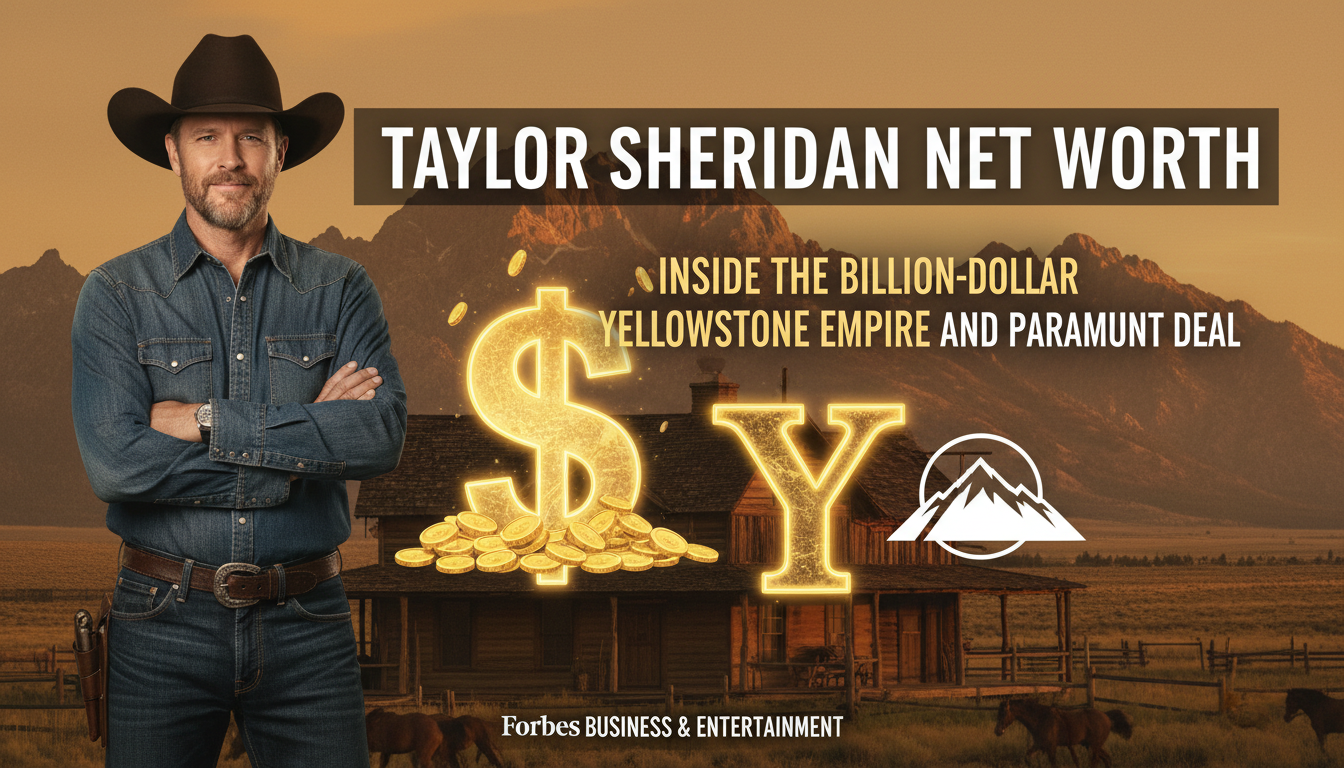
Introduction: The Cowboy Mogul Changing Hollywood’s Landscape
In the high-stakes world of entertainment, few figures have orchestrated a meteoric rise quite like Taylor Sheridan. Once known primarily as a character actor facing the typical struggles of the industry—most notably as Deputy Chief David Hale in Sons of Anarchy—Sheridan reinvented himself into one of the most prolific and highly-paid showrunners in television history. Today, the conversation surrounding Taylor Sheridan's net worth is not just about a writer’s salary; it is a case study in empire-building, intellectual property ownership, and strategic real estate investment.
Sheridan has effectively single-handedly revived the Western genre, turning the dusty tropes of cowboys and ranchers into a billion-dollar ecosystem centered around the Yellowstone universe. His deals with Paramount Global are among the most lucrative in the industry, rivaling those of titans like Ryan Murphy and Shonda Rhimes. However, unlike his contemporaries, Sheridan has diversified his wealth into tangible assets, including legendary Texas ranches and performance horse operations, creating a synergy between his on-screen narratives and his real-life business ventures.
This deep dive explores the financial mechanics behind the Sheridan empire, analyzing his massive production deals, his smart acquisition of the Four Sixes Ranch, and the strategic business moves that have cemented his status as a modern-day media tycoon.
The Financial Breakdown: Estimating Taylor Sheridan’s Net Worth
As of 2025, financial analysts and entertainment insiders estimate Taylor Sheridan’s net worth to range significantly, often cited between $200 million and $500 million. This variance exists because much of his wealth is tied up in appreciating real estate assets and backend profit participation points in his sprawling television universe. Unlike a standard salary, Sheridan’s income is a complex mix of showrunner fees, writing royalties, directing fees, and producer credits.
The Historic Paramount Deal
The cornerstone of Sheridan’s wealth is his relationship with Paramount. In 2021, Sheridan signed an expansive overall deal with ViacomCBS (now Paramount Global) valued at approximately $200 million. This agreement was designed to keep the hitmaker exclusive to their platforms, incentivizing him to churn out content at a pace rarely seen in Hollywood. Under this umbrella, he created hits like Mayor of Kingstown, 1883, 1923, Tulsa King, and Lioness.
Understanding how Sheridan leverages these contracts provides a masterclass in modern wealth building strategies. He negotiated not just for upfront fees but for creative control and production autonomy, allowing him to film on his own properties—a move that efficiently recycles production budgets back into his own businesses.
The Yellowstone Effect: Turning a Script into a Franchise
It is difficult to overstate the impact of Yellowstone. Originally a script that struggled to find a home—HBO famously passed on it—the show became the most-watched drama on cable television. The success of the Dutton family saga proved that there was a massive, underserved audience in the American heartland craving high-stakes drama set outside of New York or Los Angeles.
This success catapulted Sheridan into the center of viral entertainment news, making him a power player who could demand unprecedented budgets. For instance, the prequel 1923, starring Harrison Ford and Helen Mirren, reportedly cost upwards of $22 million per episode. This level of investment from the studio highlights their reliance on the “Sheridan-verse” to drive subscriptions for Paramount+.
The Spinoff Ecosystem
Sheridan’s wealth is further bolstered by the expansion of the main show into a web of spinoffs:
- 1883: A limited series detailing the Dutton origin story.
- 1923: The next generation surviving the Great Depression.
- 6666: A planned spinoff set on the Four Sixes Ranch.
- The Madison: The next chapter in the modern timeline.
Each series generates new revenue streams through international licensing, streaming rights, and merchandise, all contributing to the bottom line of Sheridan’s production company, Bosque Ranch Productions.
Real Estate Tycoon: The Four Sixes and Bosque Ranch
Perhaps the most unique aspect of Taylor Sheridan’s portfolio is his transition from screenwriter to land baron. He does not just write about cowboys; he lives the life, and he has monetized it brilliantly.
The 6666 Ranch Acquisition
In a move that blurred the lines between fiction and reality, Sheridan led an investment group to purchase the legendary 6666 Ranch (Four Sixes) in Texas. The property, spanning over 266,000 acres, was listed for $192 million. This was not merely a vanity purchase; the ranch is a working business with cattle and oil resources, and it serves as a primary filming location for Yellowstone and its spinoffs.
By owning the location where his shows are filmed, Sheridan effectively charges the production studio (Paramount) to rent the land, horses, and facilities. Financial experts often analyze such moves on platforms like FintechZoom to understand the tax advantages and revenue cycles of asset-backed production. It allows Sheridan to improve his property using studio money while ensuring authenticity on screen.
Bosque Ranch
Before the Four Sixes, Sheridan established Bosque Ranch in Weatherford, Texas. This facility is a premier hub for performance horses, particularly in the cutting and reining disciplines. The ranch also hosts events and has its own craft coffee and tequila partnerships, further diversifying his income streams.
The “Cowboy Cartel” Aesthetic and Cultural Impact
Sheridan has revitalized Western fashion and lifestyle, influencing trends far beyond television screens. The “Yellowstone look”—Carhartt jackets, cowboy boots, Stetson hats—has become a massive retail driver. This cultural shift is documented in every major modern style guide, proving that Sheridan’s influence extends into consumer behavior.
This cultural authority allows him to secure brand partnerships and sponsorships that other showrunners simply cannot access. His ability to integrate brands organically into his shows (product placement) is another revenue vertical that benefits his production entities.
Streaming Complexity: Peacock vs. Paramount+
One of the great ironies of Sheridan’s success is the streaming rights debacle surrounding Yellowstone. Due to a deal made before the launch of Paramount+, the streaming rights for the flagship show in the US belong to Peacock (NBCUniversal). This fragmentation has confused many fans who ask, “Where can I watch the new season?” much like they search for where can I watch The Hunger Games for free or other popular media across different platforms.
Despite this, Sheridan used the leverage of the spinoffs (which stream exclusively on Paramount+) to drive subscribers to the parent company’s platform, proving his value as a subscriber-retention engine.
Frequently Asked Questions
1. What is Taylor Sheridan’s estimated net worth in 2025?
Taylor Sheridan’s net worth is estimated to be between $200 million and $500 million. This figure includes his earnings from his $200 million deal with Paramount, his ownership stake in the 6666 Ranch, and ongoing royalties from his extensive library of TV shows and films.
2. Does Taylor Sheridan own the Yellowstone ranch in real life?
The fictional “Yellowstone” ranch is filmed primarily at the Chief Joseph Ranch in Darby, Montana, which Sheridan does not own. However, he does own the Bosque Ranch in Weatherford, Texas, and is the face of the investment group that purchased the massive 6666 Ranch in Texas, which features heavily in the series.
3. How much does Taylor Sheridan get paid per episode?
While specific per-episode fees are not always public, top-tier showrunners of his caliber typically earn between $25,000 to $100,000 per episode in script fees, plus significant producing fees. However, his overall deal with Paramount (valued at roughly $200 million over several years) likely encompasses these fees, effectively paying him tens of millions annually regardless of the specific episode count.
4. Why does Taylor Sheridan write all the episodes himself?
Sheridan is known for his unique “auteur” approach to television, often writing every episode of a season himself. He has stated that he prefers to maintain strict creative control to ensure the voice and pacing of the story remain consistent, a rarity in US television where “writers’ rooms” are the norm.
5. What happened between Taylor Sheridan and Kevin Costner?
Tensions reportedly arose regarding shooting schedules and creative direction. Costner, wishing to focus on his own Western project Horizon, had limited availability, which clashed with Sheridan’s production timelines. This conflict ultimately contributed to Costner’s departure from the series in the final season.
Conclusion
Taylor Sheridan’s journey from a working actor to a media mogul is a testament to the power of owning one’s narrative—literally and figuratively. By retaining creative control and cleverly integrating his passion for ranching with his production requirements, he has built a net worth that rivals the biggest names in Hollywood.
His financial architecture, anchored by the massive Paramount deal and fortified by tangible real estate assets like the Four Sixes Ranch, ensures that his legacy will endure long after the final credits roll on the Dutton family saga. As he continues to expand his universe, Sheridan remains a singular force, proving that in the modern streaming era, content is king, but owning the land the king stands on is the ultimate business move.

The editor of All-AI.Tools is a professional technology writer specializing in artificial intelligence and chatbot tools. With a strong focus on delivering clear, accurate, and up-to-date content, they provide readers with in-depth guides, expert insights, and practical information on the latest AI innovations. Committed to fostering understanding of fun AI tools and their real-world applications, the editor ensures that All-AI.Tools remains a reliable and authoritative resource for professionals, developers, and AI enthusiasts.