.png)

Introduction: The Digital Pulse of American Logistics
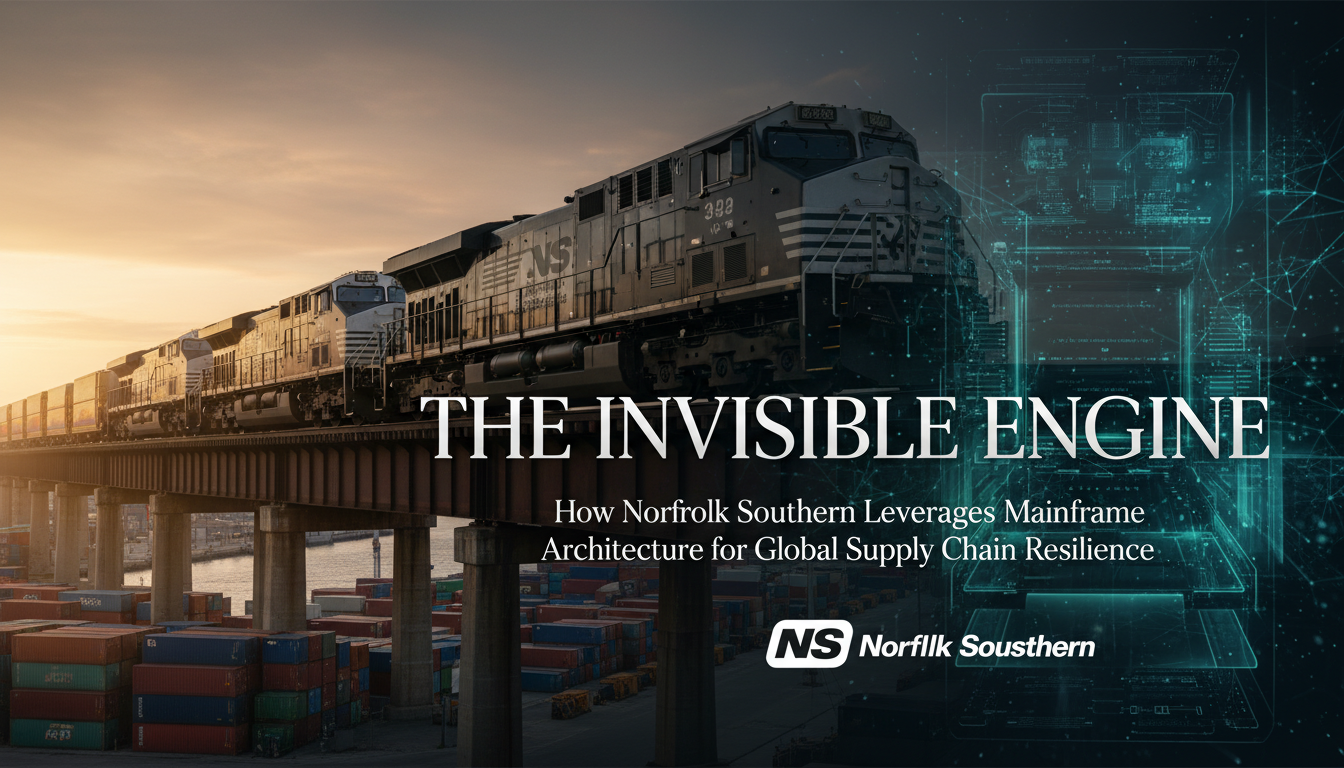
In the high-stakes world of global logistics, the physical movement of freight is only half the battle. The other half is an invisible, relentless stream of data that orchestrates the movement of millions of tons of goods across continents. At the heart of this digital orchestration for industry giants like Norfolk Southern sits a technology often misunderstood as a relic of the past, but which is, in reality, the bedrock of modern resilience: Mainframe Architecture.
While emerging technologies and All AI Tools garner headlines for innovation, the heavy lifting of transaction processing, real-time scheduling, and mission-critical data integrity remains the domain of the mainframe. For Norfolk Southern, the mainframe is not merely a legacy system; it is the "Invisible Engine" that ensures supply chain continuity in an era of disruption. This article explores how Norfolk Southern leverages advanced mainframe computing to maintain a competitive edge, ensuring that the rail network operates with the precision of a Swiss watch and the robustness required by the 21st-century economy.
The Strategic Imperative of Mainframe Architecture in Rail Logistics
To understand why a logistics titan would double down on mainframe technology, one must first grasp the scale of the operation. Rail networks are complex adaptive systems where a single delay can cascade into a nationwide bottleneck. The data throughput required to manage thousands of locomotives, tens of thousands of railcars, and millions of shipments annually is staggering.
The mainframe offers an architectural advantage that distributed cloud systems struggle to match in specific use cases: vertical scaling and I/O throughput. Unlike commodity servers that scale horizontally, mainframes are designed to handle massive volumes of simultaneous transactions—such as waybill processing, track sensor data ingestion, and crew scheduling—without latency or failure. This capability is paramount for mastering the NS mainframe and understanding its strategic value in high-availability enterprise computing.
Defining Resilience in the Supply Chain
Resilience is the ability to absorb shock and recover quickly. In IT infrastructure, this translates to "five nines" (99.999%) availability. For Norfolk Southern, downtime is not an inconvenience; it is a financial and operational catastrophe. The mainframe architecture provides a fault-tolerant environment where hardware failures are isolated and resolved without interrupting the operating system or the applications running on top of it. This level of reliability is the silent guardian of the supply chain, ensuring that even during peak loads or cyber threats, the trains keep moving.
Decoding the Technical Infrastructure: The "NS Mainframe" Ecosystem
The term "NS Mainframe" refers to the specific implementation of IBM Z series or similar enterprise-grade servers within the Norfolk Southern IT ecosystem. This architecture is characterized by its ability to support legacy applications written in COBOL while simultaneously integrating with modern Java, Python, and RESTful APIs. This hybrid approach allows the railroad to modernize without the risk of a complete "rip and replace" strategy.
1. High-Volume Transaction Processing
Every time a railcar passes a scanner, a client queries a shipment status, or a crew member clocks in, a transaction occurs. The mainframe processes these requests in microseconds. This speed is critical for real-time visibility, a feature that customers now demand. By leveraging the superior caching and processor architecture of mainframes, Norfolk Southern ensures that data is always current, accurate, and accessible.
2. Data Protection and Security
In an age where critical infrastructure is a prime target for cyberattacks, the mainframe’s inherent security features are invaluable. Pervasive encryption, which encrypts data at the hardware level without impacting performance, creates a fortress around sensitive shipping data. A robust data protection strategy is essential for any enterprise, but for a Class I railroad, it is a matter of national security. The mainframe’s architecture segregates workloads, ensuring that a breach in a peripheral web application cannot easily migrate to the core database.
Modernizing the Monolith: AI, Cloud, and Hybrid Integration
The narrative that mainframes are isolated islands of data is outdated. Today, Norfolk Southern leverages middleware and API connectors to expose mainframe logic to modern web and mobile applications. This modernization strategy allows the company to innovate on the edge while maintaining stability at the core.
Integrating Generative AI with Legacy Data
One of the most exciting frontiers is the application of Artificial Intelligence to mainframe data. By feeding historical shipping data, weather patterns, and maintenance logs into AI models, Norfolk Southern can predict failures before they happen. Executives often ask, where can I find the latest insights on generative AI adoption trends? The answer lies in the convergence of these massive legacy datasets with modern neural networks. The mainframe acts as the single source of truth, feeding clean, structured data to AI engines running in the cloud or on linux partitions (IFL) within the mainframe itself.
The Role of Predictive Maintenance
Using data collected from wayside detectors, the mainframe processes inputs to flag wheel bearing temperatures or vibration anomalies. This data is analyzed instantly to alert dispatchers to stop a train before a derailment occurs. This seamless integration of IoT (Internet of Things) data with high-speed mainframe processing is a prime example of technological convergence saving lives and cargo.
Operational Efficiency: The Economic Impact
Efficiency in railroading is measured by the Operating Ratio (OR). Technology plays a pivotal role in lowering this ratio by optimizing fuel consumption, crew deployment, and asset utilization. The mainframe’s ability to run complex optimization algorithms—solving the "traveling salesman problem" at a massive scale—enables Norfolk Southern to route trains more effectively, reducing dwell time in terminals.
Furthermore, the centralization of computing resources reduces the IT footprint. Instead of managing thousands of x86 servers, a few mainframes can handle the workload, reducing energy consumption and cooling costs, aligning with corporate sustainability goals. This efficiency is mirrored in other high-volume industries; for instance, understanding how banking systems handle debt collection through tools like Tallyman at Axis Bank reveals similar reliance on centralized, high-throughput computing architectures.
Challenges and the Talent Gap
Despite the advantages, maintaining a mainframe infrastructure comes with challenges. The primary hurdle is the talent gap. As the generation of engineers who built these systems retires, there is a pressing need for new talent proficient in COBOL, JCL, and z/OS. However, Norfolk Southern and other tech-forward entities are addressing this by cross-training developers and utilizing modern DevOps tools that allow developers to interact with the mainframe using familiar interfaces like VS Code and Git.
Another challenge is the perception of obsolescence. Stakeholders often push for cloud-native solutions without understanding the cost or latency implications. A balanced approach, often verified by independent security reports and TCO (Total Cost of Ownership) analyses, usually vindicates the hybrid cloud/mainframe model for heavy transactional workloads.
Future-Proofing the Supply Chain
Looking ahead, the role of the mainframe at Norfolk Southern is set to evolve rather than diminish. With the rise of autonomous rail inspection vehicles and blockchain for immutable supply chain tracking, the demand for processing power will only increase. The mainframe’s ability to support Linux containers means it can run the latest microservices alongside legacy COBOL programs, bridging the gap between the past and the future.
We are also seeing the integration of advanced Large Language Models (LLMs) to assist in querying these complex databases. Tools similar to OpenAI’s GPT-4 are being adapted to help non-technical staff interact with mainframe data using natural language, democratizing access to critical insights across the organization.
Frequently Asked Questions
1. Why does Norfolk Southern still use mainframes instead of moving entirely to the cloud?
Norfolk Southern retains mainframes because they offer unmatched reliability, security, and transaction processing speed for mission-critical data. While cloud solutions are used for analytics and customer-facing apps, the core logic of rail operations requires the low-latency and high-availability that only mainframes provide effectively at this scale.
2. What is the "NS Mainframe" referring to in technical discussions?
The "NS Mainframe" refers to Norfolk Southern’s specific enterprise computing environment, likely built on IBM Z technology. It encompasses the hardware, the z/OS operating system, and the custom legacy applications that manage train scheduling, waybills, and asset tracking.
3. How does mainframe architecture improve supply chain resilience?
Mainframe architecture improves resilience by ensuring near-zero downtime. Its hardware redundancy allows for component replacement during operation, and its ability to handle massive spikes in data traffic ensures that logistics systems remain operational even during peak shipping seasons or disruptions.
4. Can modern AI tools work with legacy mainframe data?
Yes, modern AI tools can integrate with mainframes via APIs, data replication, or by running directly on the mainframe using Linux partitions (IFL). This allows companies to apply machine learning models to decades of historical data stored on the mainframe to predict trends and optimize operations.
5. Is mainframe technology secure against modern cyber threats?
Mainframes are considered some of the most secure commercial platforms available. They utilize pervasive encryption, hardware security modules, and strict logical partitioning to protect data. However, security is a continuous process, requiring robust strategies like those found in comprehensive data protection strategy guides.
Conclusion
The "Invisible Engine" of Norfolk Southern is a testament to the enduring power of mainframe architecture in a digitally transformed world. By leveraging the unmatched stability and processing power of these systems, Norfolk Southern ensures that the global supply chain remains resilient against disruptions. Far from being a relic, the mainframe is the foundation upon which the future of autonomous, data-driven rail logistics is being built. As the industry evolves, the synergy between this proven technology and emerging AI innovations will define the next era of efficiency in global transportation.

The editor of All-AI.Tools is a professional technology writer specializing in artificial intelligence and chatbot tools. With a strong focus on delivering clear, accurate, and up-to-date content, they provide readers with in-depth guides, expert insights, and practical information on the latest AI innovations. Committed to fostering understanding of fun AI tools and their real-world applications, the editor ensures that All-AI.Tools remains a reliable and authoritative resource for professionals, developers, and AI enthusiasts.