.png)
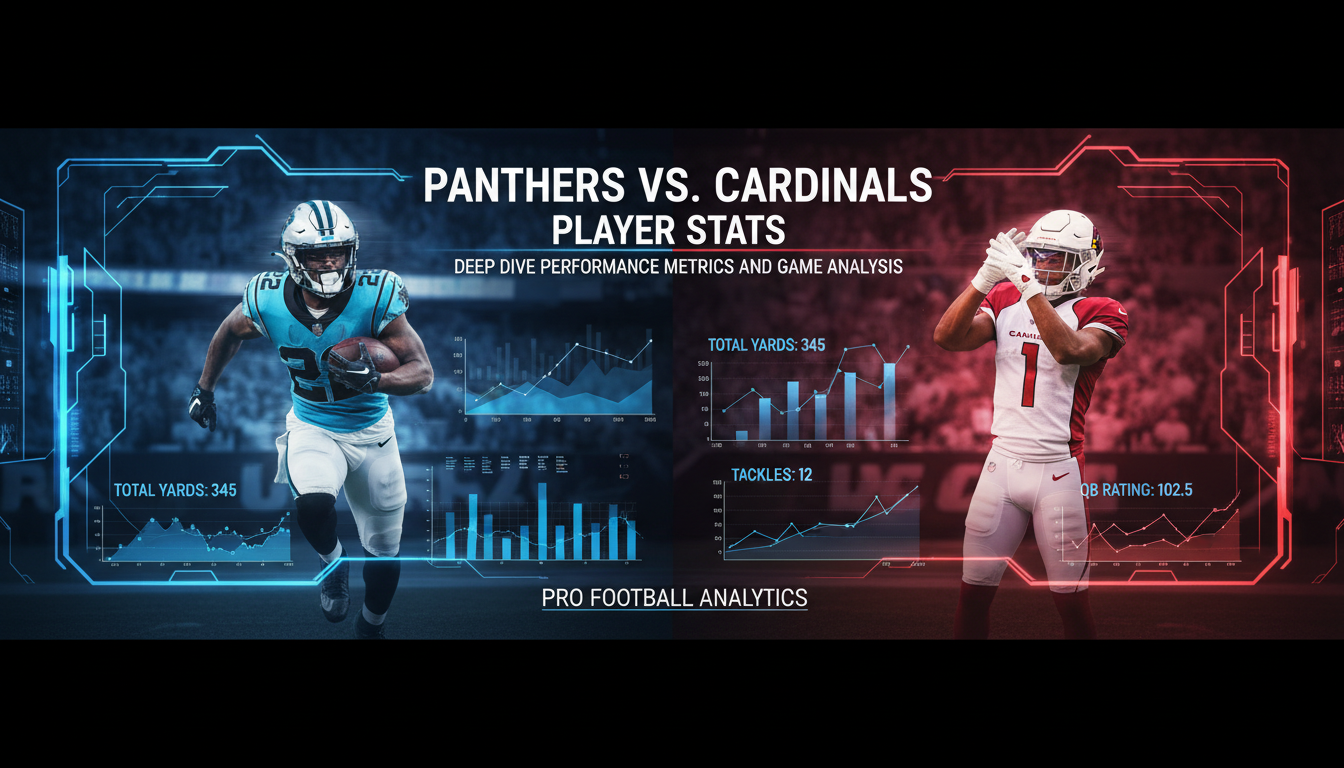
Introduction: Analyzing the Panthers vs. Cardinals Gridiron Rivalry
When the Carolina Panthers face off against the Arizona Cardinals, NFL fans are often treated to a fascinating clash of styles. Whether it is a battle of former first-overall picks, a defensive struggle, or an offensive shootout, the Panthers vs. Cardinals player stats tell a deeper story than just the final score. In the modern era of football, advanced metrics, next-gen statistics, and deep-dive performance analysis have become essential for fantasy football managers, sports bettors, and dedicated analysts alike.
This comprehensive guide delves into the key performance indicators (KPIs) that define this NFC matchup. We will explore quarterback efficiency, backfield production, receiver separation, and defensive impact plays. By understanding the historical and recent data trends, we can better predict how these teams match up on the field and what specific player metrics drive the outcome of the game.
In this article, we leverage data-driven insights to break down the effectiveness of both rosters, examining everything from EPA (Expected Points Added) to DVOA (Defense-adjusted Value Over Average).
Quarterback Performance: Efficiency and Decision Making
The quarterback battle is often the primary determinant of the game’s flow. When analyzing the Panthers vs. Cardinals, the contrast in quarterback play styles has historically been a focal point.
Arizona Cardinals QB Metrics: Mobility and Deep Ball Accuracy
The Cardinals’ offense traditionally relies on a dynamic quarterback capable of extending plays. Key metrics to watch include:
- Time to Throw (TTT): Analyzing how long the QB holds the ball before releasing. A higher TTT often indicates a scrambling style or a play-action-heavy scheme.
- Air Yards per Attempt: This stat reveals the aggressiveness of the passing attack. The Cardinals often look to stretch the field vertically.
- Rushing Yards over Expected (RYOE): For mobile QBs, this metric separates standard scrambling from elite playmaking ability.
Analyzing the quarterback’s ability to process defenses requires more than just box score reading. Advanced tools and AI models are now used to predict these outcomes. If you are interested in how data models process such queries, you might find our guide on how to ask AI a question useful for refining your own sports analytics prompts.
Carolina Panthers QB Metrics: Pocket Presence and Short-Intermediate Accuracy
The Panthers have historically fluctuated between different offensive identities. Regardless of the specific signal-caller, the following stats are crucial for their success against Arizona’s defense:
- Completion Percentage Over Expected (CPOE): This measures a QB’s accuracy relative to the difficulty of their throws.
- Sack Rate: A critical metric against an aggressive Cardinals pass rush. High sack rates often kill drives before they begin.
- Third Down Conversion Rate: The ability to sustain drives is paramount. Tracking success rates on 3rd and medium (3-6 yards) provides insight into the QB’s reliability.
Offensive Weapons: Rushing and Receiving Analysis
Beyond the center, the skill position players dictate the rhythm of the game. Comparing the Panthers vs. Cardinals player stats for running backs and wide receivers reveals where the tactical advantages lie.
Running Back Efficiency: Yards After Contact
The ground game is often the stabilizer. When looking at the running backs for both teams, Yards After Contact (YAC) is the gold standard for measuring individual effort versus offensive line blocking.
- Carolina’s Ground Attack: Focus on the volume of carries inside the tackles versus outside zone runs. Success here often correlates with time of possession dominance.
- Arizona’s Backfield: Look for metrics regarding reception totals for running backs. The Cardinals frequently utilize backs in the passing game to exploit linebacker mismatches.
Receiver Separation and Target Share
For wide receivers and tight ends, volume is king, but efficiency is queen. Key stats include:
- Target Share: What percentage of the team’s total pass attempts go to a specific player? A target share above 25% indicates a true alpha receiver.
- Average Depth of Target (aDOT): This tells us where on the field the receiver is operating. Low aDOT suggests a possession receiver, while high aDOT indicates a deep threat.
Fans who want to verify these stats by re-watching specific plays often look for reliable streaming sources. While official broadcasts are best, many users search for best Streameast live alternatives to catch replays and game film for deeper analysis.
Defensive Deep Dive: Disruption and Turnovers
Offense sells tickets, but defense wins championships—and covers spreads. The defensive stats in a Panthers vs. Cardinals matchup are often where the game is decided.
Pass Rush and Pressure Rates
The Cardinals’ defense has often been characterized by creative blitz packages. We analyze:
- Pressure Rate: The percentage of dropbacks where the QB is hurried, hit, or sacked.
- Blitz Frequency: How often the defense sends extra rushers. This is vital when playing against a young or inexperienced Panthers QB.
Secondary Performance: Coverage Metrics
Carolina’s secondary stats focus on limiting explosive plays. Key metrics include:
- Yards Allowed Per Coverage Snap: A granular look at how individual cornerbacks perform.
- Passer Rating Allowed: What is the QB rating when targeting a specific defender?
The Financial Aspect: ROI on Player Performance
In the salary cap era, player stats must be weighed against their contract value. Teams analyze the Return on Investment (ROI) for every snap played. For instance, a high-paid quarterback needs to deliver top-tier QBR to justify the cap hit, whereas a rookie running back performing well offers immense value.
Understanding the financial implications of sports performance is similar to analyzing market trends. For those interested in the intersection of finance and performance metrics, checking resources like FintechZoom can provide broader context on financial analytics which parallels sports cap management.
Simulating the Matchup: Gaming and Projections
Modern technology allows fans to simulate the Panthers vs. Cardinals matchup long before kickoff. Video game simulations have become surprisingly accurate predictors of player stats due to their sophisticated physics and data engines.
Whether you are playing on next-gen consoles or older systems, seeing how digital avatars perform can give insights into roster depth. Many gamers ask about cross-generational compatibility when setting up leagues to simulate these games; for example, understanding if you can play Xbox One games on Xbox Series X ensures you can run your simulations on the hardware you have available.
Advanced Analytics: Next Gen Stats
The NFL’s partnership with Amazon Web Services (AWS) has brought “Next Gen Stats” to the forefront. These metrics use RFID tags in player equipment to track movement.
Speed and Distance
- Top Speed: Measured in MPH, this stat highlights the breakaway speed of receivers and returners in this matchup.
- Cushion Distance: The distance a defender gives a receiver at the snap. This is crucial for analyzing the Panthers’ offensive strategy against the Cardinals’ defensive backs.
Completion Probability
Using historical data and real-time tracking, algorithms can calculate the probability of a catch being made. A catch with a sub-30% probability that is completed is considered an “improbable catch” and can shift the momentum of the game entirely.
Staying updated with real-time stats and player availability is crucial. Injuries can shift lines and projections instantly. Following viral entertainment news feeds can sometimes break stories about player status before official sports apps do.
Conclusion
The Panthers vs. Cardinals player stats offer a treasure trove of information for those willing to dig deep. From quarterback efficiency ratings like EPA and CPOE to defensive pressure rates and secondary coverage metrics, every number tells a part of the story. Whether the Cardinals are airing it out deep or the Panthers are establishing a gritty ground game, the data reveals the tactical nuances that define the contest.
By leveraging advanced analytics, understanding the financial context of player performance, and even utilizing simulation tools, fans and analysts can gain a holistic view of this NFC rivalry. As technology evolves, the depth of data available will only increase, making the ability to interpret these metrics a valuable skill for any football enthusiast.
Frequently Asked Questions (FAQs)
1. Where can I find real-time Panthers vs. Cardinals player stats?
Real-time stats are available on the official NFL website, ESPN, and specialized sports analytics platforms like Pro Football Focus (PFF) or Next Gen Stats.
2. What is the most important stat for predicting the winner of this matchup?
Turnover differential is historically the strongest predictor of winning. The team that protects the ball and forces takeaways typically wins, regardless of total yardage.
3. How does player health impact these performance metrics?
Injuries significantly skew stats. For example, a QB’s completion percentage often drops if his starting left tackle is injured, even if the QB himself is healthy. Always check injury reports alongside stat sheets.
4. Are historical stats reliable for predicting future Panthers vs. Cardinals games?
Historical trends are useful but should be weighed against roster turnover. Since NFL rosters change significantly every 3-4 years, prioritize data from the current season or the current coaching regime.
5. How is QBR different from Passer Rating in this matchup analysis?
Passer Rating is a simple formula based on yards, TDs, and interceptions. Total QBR (Quarterback Rating) adjusts for opponent strength and includes rushing value and situational factors, making it a more comprehensive metric for modern QBs like Kyler Murray or Bryce Young.

The editor of All-AI.Tools is a professional technology writer specializing in artificial intelligence and chatbot tools. With a strong focus on delivering clear, accurate, and up-to-date content, they provide readers with in-depth guides, expert insights, and practical information on the latest AI innovations. Committed to fostering understanding of fun AI tools and their real-world applications, the editor ensures that All-AI.Tools remains a reliable and authoritative resource for professionals, developers, and AI enthusiasts.